The economics are private. We decided to make them public.
Our CEO Jimmy Hanna challenges the industry’s deepest habit: keeping the lender's profit a secret. Here is the story behind the Fairness Receipt, and why showing you our margin isn't charity, it’s just good business.
When did you last do business with someone and know, exactly, what they made from you?
Think about the last time you hired someone for a significant job. A contractor, a builder, maybe an agency. They gave you a number. You accepted. The work was done well enough. And then somewhere in the middle of writing the final payment, you realised you had no idea what the job had actually cost them, what their margin was, what your business was worth to them. You just knew your side of the transaction. Their side was theirs.
Most business relationships work this way. The price is disclosed. The economics are private. Nobody questions it.
In lending it's the same, only the relationship is longer and it runs deeper into your life. You pay for months, sometimes years. The rate is disclosed. Some fees are visible somewhere. But what the lender actually earns from you over the life of that credit, what their costs are, what the profit on your specific agreement amounts to, that number doesn't get shown to you. Not when you start. Not when you finish. Never, officially.
We decided to change that.
We built something we called the Fairness Receipt. The moment you make a borrow from Fairlo, before a single repayment, you receive a receipt that shows you exactly what you'll pay, what it'll cost us broken down, and what we plan to make from you over the full life of that credit. Not buried in a terms document. Shown to you plainly, at the start.
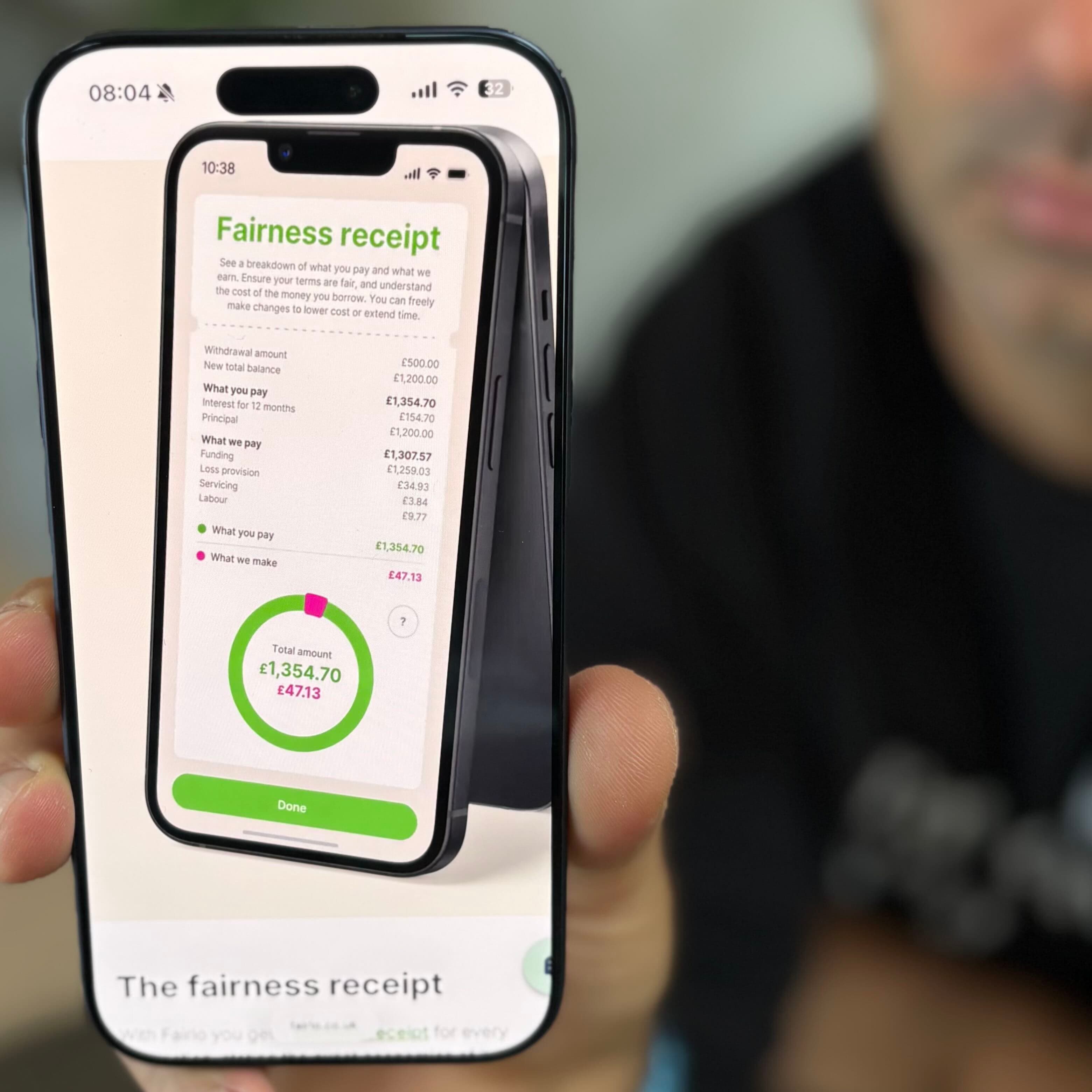
We are, as far as we know, the first lender in the world to have done this. A small fintech from Stockholm. Which is both a little sad and quite a lot to say about our industry.
The reason isn't that our margins look different from everyone else's. It's that we believe an educated customer is the best customer. Someone who understands exactly what they're entering into makes a more considered decision. They relate to the product differently, to us differently. The transparency isn't charity. It's how we think a good credit relationship should work.
The honest reason most lenders don't do this is a mixture of laziness and the requirement to build a culture that's genuinely comfortable being seen. Transparency as a value is easy to put on a wall. Transparency as a practice means showing people things that make you accountable.
It shouldn't take a small fintech from Stockholm to make this normal.

CEO & Co-Founder, Fairlo UK Limited